LDH lifts ‘do not use’ water advisory for Walnut Bayou Water System customers
MADISON PARISH, La. (KNOE) - UPDATE: The Louisiana Department of Health has lifted the ‘do not use’ water advisory for the area served by the Walnut Bayou Water system.
On Aug. 15, LDH issued the advisory after drinking water was exposed to a chemical known as paraquat.
As of today (Aug. 22), testing results show that no paraquat remains in the water system. According to LDH officials said the Walnut Bayou Water System conducted extensive flushing, removing the paraquat from the system.
LDH is now instructing customers to flush their home systems before using their water. Residents may need to flush over several cycles if they continue to smell a chemical odor or have discolored water.
LDH said ALL customers should do the following:
- Flush hot water taps for 15 minutes, then cold water taps for 5 to 10 minutes.
- Flush ice makers, dishwashers and washing machines as well.
- Flush toilets at least one time.
- After discarding any ice currently in the icemaker, allow the container to fill completely, then discard the ice and clean the container before replacing it.
- If the refrigerator has a cold water dispenser, replace the filter and flush the dispenser for 5 minutes.
- For dishwashers and washing machines, after flushing hot water taps, allow dishwashers and washing machines to run for one hot cycle and one cold cycle while empty.
LDH said the following in a press release:
“The amount of paraquat in the system will not cause corrosion or other damage to pipes and it does not linger. Once the chemical is flushed out of the water system and household lines, paraquat will no longer be present. This means the drinking water will be safe to use and consume.
Paraquat is a toxic herbicide primarily used for weed control that should not be consumed. Individuals should avoid bathing, handwashing and washing clothes with water contaminated with paraquat, as the chemical can also be absorbed through the skin. Infants, children and people with respiratory illness are most at risk of harmful health effects of paraquat consumption or exposure.
Paraquat testing of the home system is not necessary once home flushing is completed and ventilation of the smell has dissipated. However, if someone wants a laboratory to test their water, they should use a lab certified to perform paraquat analysis and ship their samples to the lab. Eurofins Scientific (in California and Indiana), SGS (in Colorado) and Pace Analytics can run paraquat tests.”
Below is a previous version of the article when the ‘do not use’ water advisory was in effect.
Aug. 21, 2024
MADISON PARISH, La. (KNOE) - UPDATE: The Louisiana Department of Health is continuing its ‘do not use’ water advisory. LDH says preliminary testing results show paraquat remains in one area of the water system’s end point.
This is an updated story. Read below for previous information.
Aug. 15, 2024
MADISON PARISH, La. (KNOE) - The Louisiana Department of Health has issued a ‘do not use’ water advisory for Madison Parish residents who are served by the Walnut Bayou Water System.
LDH officials said a water line break on Highway 603 near Verhagen Road resulted in drinking water being exposed to paraquat - a toxic chemical widely used as a plant killer.
LDH said the following in a press release:
“The exposure occurred as a farmer was filling a tank and the low pressure in the water line created a backflow of chemicals from the tank. Some customers have reported a strong chemical smell and taste in tap water following the exposure.
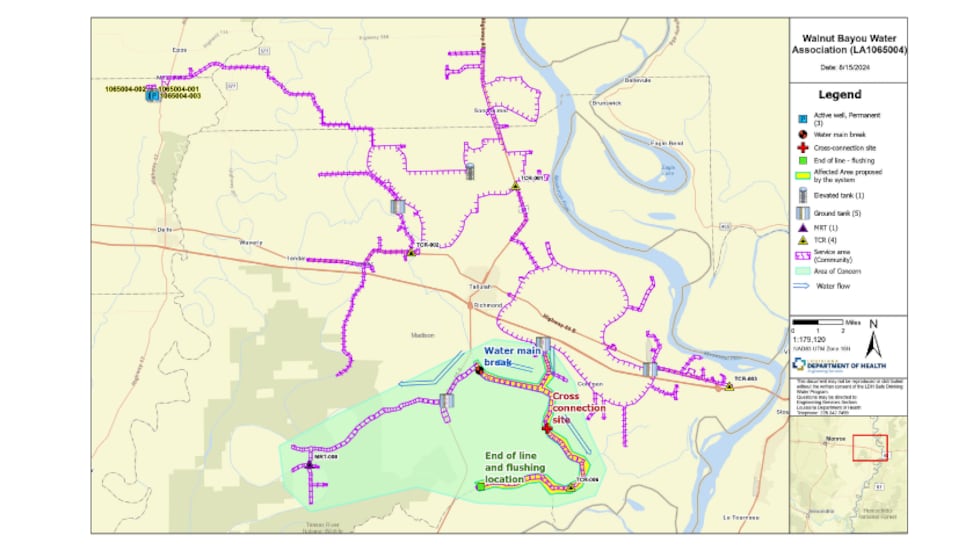
LDH has worked closely with local officials to identify the impacted area, sample the drinking water, and assess risk for residents. The below map shows the area of concern for Walnut Bayou. Everyone in the green shaded area should not use the water.”
A detailed map of the affected area can be found below:
Louisiana Surgeon General Dr. Ralph Abraham said if the chemical touches your skin, symptoms can include headache and nausea. He also said to be sure that animals are not drinking or bathing in the tap water. The water would have a chemical smell and a blue tint.
According to Dr. Abraham, the community will need to rely on bottled water until the lab results come back that the water is safe to drink again. This could take 3-5 days or until next week.
FREQUENTLY ASKED QUESTIONS
The following answers are from the Louisiana Department of Health.
What does a ‘Do Not Use’ advisory mean?
A “do not use” advisory means the following:
- Humans and animals should not drink the water or use it in a way that could potentially be ingested, such as food preparation of any kind, washing dishes, or brushing your teeth.
- Dispose of the ice in your ice maker and discontinue use until the order is lifted.
- Humans and animals should not bathe (or swim) in the water, or use it to wash hands.
- Water should not be used to wash laundry.
- Tap water can be used for flushing toilets.
How is this different from a boil water advisory?
- This advisory differs from a boil water advisory in that the water is not safe for use even if the water is boiled, because boiling the water will not remove the presence of paraquat.
What is paraquat?
Paraquat is a toxic chemical that is widely used as an herbicide (plant killer), primarily for weed and grass control. Paraquat can be absorbed by the gastrointestinal tract if ingested (by drinking or eating) and also through the skin. Because paraquat is highly poisonous, contaminated water should not be used.
How do I know if my water has been contaminated?
- Water contaminated with paraquat may have a chemical odor and may be discolored. U.S. versions of the chemical contain blue dye and a strong odor as a warning to deter ingestion.
- Some customers have reported a strong chemical smell and taste in tap water following the exposure.
What actions do I need to take to keep myself and my family safe?
- Do not drink your tap water.
- Do not use your tap water in any way that could potentially be ingested, such as food preparation of any kind, washing dishes, or brushing your teeth.
- Do not prepare baby bottles with your tap water.
- Dispose of the ice in your ice maker and discontinue use.
- Avoid all contact with the water from your tap. Do not use the tap water for showering or bathing, or for washing your hands.
- Do not use water to wash laundry.
How could I be exposed to paraquat?
The most likely route of exposure to paraquat is ingestion (i.e. drinking water that is contaminated with paraquat). Paraquat can also be absorbed by the skin, which is why individuals should avoid bathing, handwashing, and washing clothes with contaminated water, in addition to not drinking it.
What are the signs and symptoms of paraquat exposure?
Most information on signs, symptoms, and health effects of paraquat exposure is based on consumption of a high concentration of the chemical (i.e. acute poisonings).
Those symptoms include pain and swelling of the mouth and other gastrointestinal (digestive tract) symptoms, such as nausea, vomiting, abdominal pain, and diarrhea.
Ingestion of small to medium amounts of paraquat can lead to the development of organ failure (heart, kidney, liver) or lung scarring within days to weeks.
What should I do if I think I’ve been exposed to paraquat?
- Avoid any further ingestion of contaminated water.
- If you are experiencing symptoms, seek attention from your healthcare provider immediately.
- If you have questions or suspect that you have been exposed, contact the Louisiana Poison Center at 1-800-222-1222. You may also want to discuss your health concerns with your personal physician.
- You can contact LDH at 1-888-293-7020.
Can I flush my toilets?
Yes, tap water can be used for flushing toilets. Paraquat is not corrosive.
How long will I be unable to use the water from my tap?
LDH will advise when the water is safe to use again. LDH has collected samples from numerous locations throughout the area to determine the exact levels of paraquat in the water. LDH is also working with Walnut Bayou to flush the system of paraquat.
Can I get rid of the chemical by running my taps?
LDH is working with Walnut Bayou to flush the system of paraquat. Once the “Do Not Use” advisory has been lifted, further guidance on flushing individual household taps will be issued.
Action Steps & Resources
Will boiling my water make it safe to drink?
No. Boiling the water will not remove the presence of paraquat.
Where can I find water?
- Water can be picked up at the Walnut Bayou Water Association Office at 1105 Highway 602, Tallulah.
- Madison Parish officials are coordinating personal water delivery for those who can’t get to the pick-up site.
- For additional support, staff can be reached at 318-574-2463. You may also reach the Madison Parish Sheriff’s Office at 318-574-1833 to request water delivery.
Where can I get more information?
- Follow the Louisiana Office of the Surgeon General’s social media pages for LDH updates.
- Walnut Bayou Water System: 318-574-2463 for questions about your water system.
- U.S. Centers for Disease Control and Prevention: Click here for facts about paraquat.
According to LDH officials, the Governor’s Office of Homeland Security and Emergency Preparedness (GOHSEP) is coordinating with LDH and Madison Parish officials in communicating with residents and coordinating support in the affected area.
This is a developing story.
WATCH: KNOE Latest Video
Copyright 2024 KNOE. All rights reserved.